Qing China: Failure by Fallacy
Visual sources follow the Google Docs embed.
Historical context:
- Qing China’s failed to invade its neighboring state of Myanmar
- The war-driven Manchus, led by the Aisin Gioro clan, had taken over the great Chinese empire many years ago
- Result of Myanmar campaign: exhausted the country
- No industrial revolution occurred in China as it occurred in its European neighbors, despite previously being a source of a myriad of inventions such as gunpowder and the compass.
- The administration was an ineffective bureaucracy, increasingly unable to effectively perform its many functions such as collecting taxes, as the central state gradually lost power to provincial officials and local gentry
- Western civilizations entered Chinese ports starting in the 18th century, coming with their newfangled technology that had no Chinese parallel
- The internal Taiping Revolution began, ransacking half of China and bringing ruin to everywhere, occurred as a result of peasants unhappy with the way of life of the Qing dynasty.
- The provincial gentry landowners mobilized their own armies, which in the end crushed the rebel forces.
Argument:
See our argument on Google Docs.
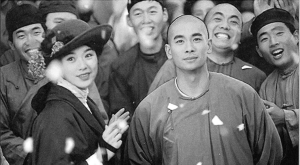
A Chinese woman can be seen wearing Western clothing in this picture. She had gone to study in Europe and mingled in the European lifestyle and became more influenced by European culture. The Qing Dynasty was for the most part denying the outsider culture, but in some cases this stance was not always taken.
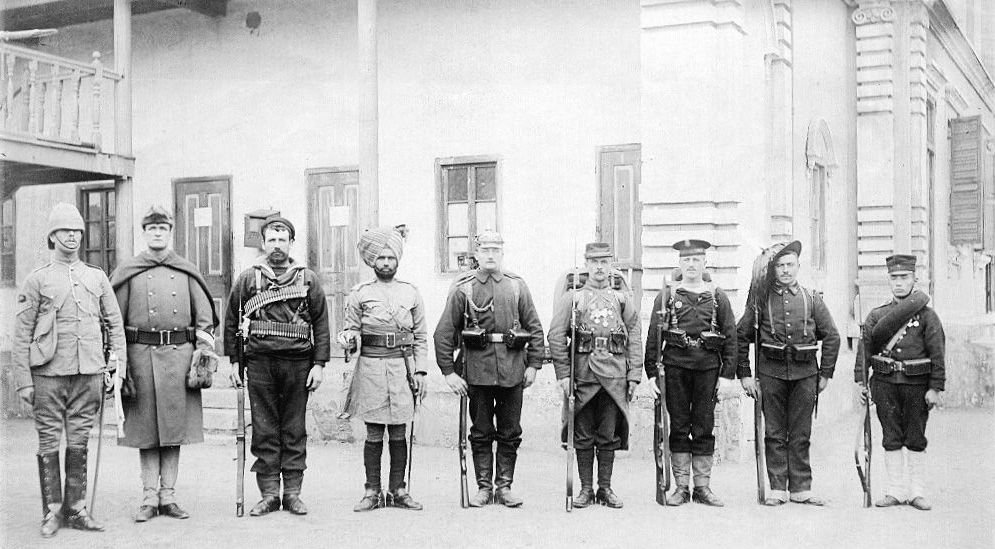
International armies were all congregated in China. They held standing armies to defend themselves in the event of rebellion against their occupation. They were well armed against the Chinese and had superior forces in almost every way. Their domination is ostensible in this picture.

These are Taiping Rebels who supported the Christian religious message. They were extremely violent rebels and they gained swaths of land and power against the Qing Dynasty but were eventually crushed. Clearly, the Qing Dynasty was at a weak point for this to be allowed.

Chinese medicine was still focused on herbal treatments and notably acupuncture. Scientifically, they had not been introduced to the Western medicine concept of the nervous system and the idea of bacterial life. Although the Chinese had advanced medicine for treatments, they lacked a true scientific understanding of the human body.
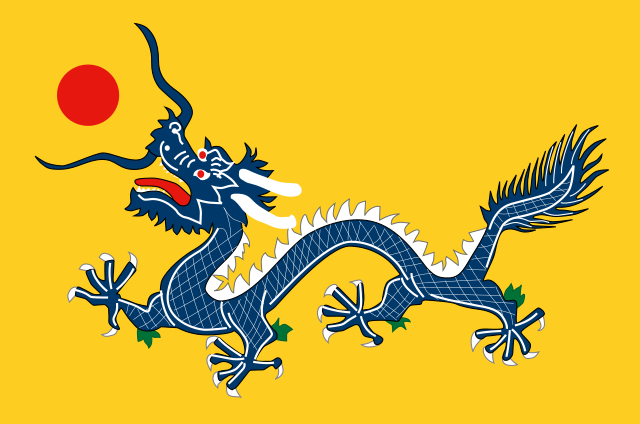
The Qing Dynasty’s flag during its rule. Extremely obvious to the viewer, the dynasty still embodied the old ideals of the Chinese dragon and was still in the archaic mindset of old imperialism. The Chinese lion was no match for European guns and unequal treaties.
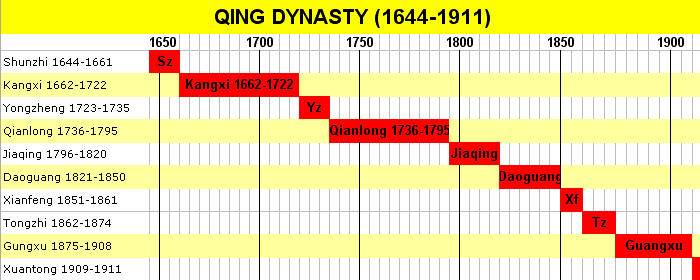
The Qing Dynasty lasted for quite some time during the time of foreign rule. Evident from the graph, Qianlong, who initiated the invasion of Burma had a long tenure as the emperor, which probably gave him the idea that he could be more aggressive with his powers. Other emperors did not have a very long tenure which indicates that the dynasty was largely unstable.

This image is of Chinese Imperial troops being trained by Western foreigners. The Western foreigners actually were willing to train the imperial troops because they were taking advantage of the Qing Dynasty for their cooperation with foreigners. The Qing Dynasty acted as their puppets in many cases and the imperial armies enforced laws upon their own Chinese subjects. In this case, the Westerners still benefited from aiding the Qing Dynasty in this case.